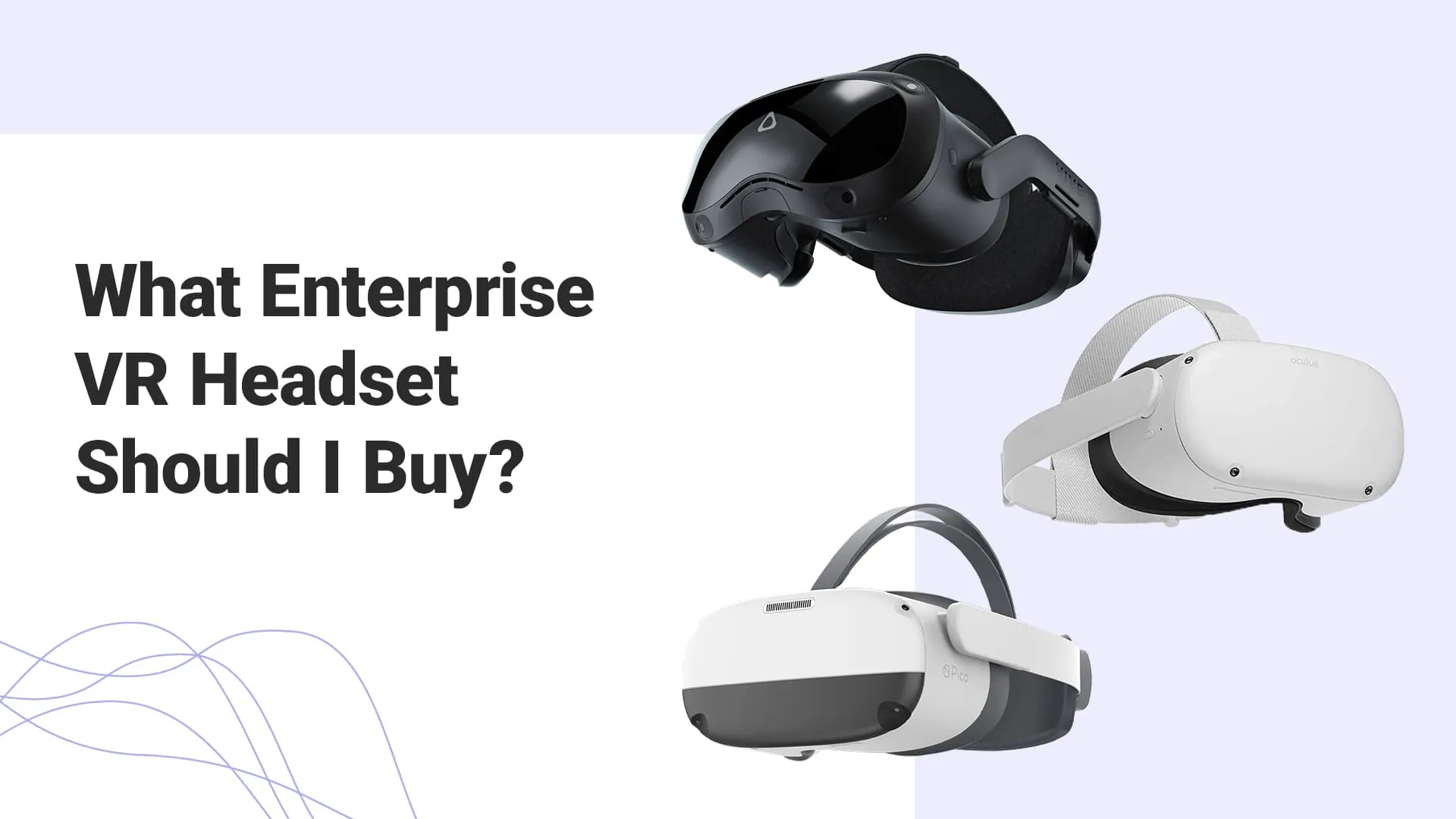
The Enterprise Imperative: Navigating the Mixed Reality Landscape in 2026
Mixed Reality (MR) has firmly transitioned from a futuristic concept to a practical, value-driving technology within the enterprise. In 2026, companies across diverse sectors, from manufacturing and healthcare to retail and education, are leveraging MR to revolutionize training programs, enhance immersive visualization, foster spatial collaboration, and craft next-generation customer experiences. This paradigm shift, however, brings a critical challenge: selecting the right MR hardware. With major players like Apple, Meta, Samsung, and specialized enterprise vendors continuously pushing the boundaries, organizations face a strategic imperative to avoid the costly pitfall of hardware-use-case mismatch. The truth is, there's no single "best" mixed reality headset; only the one that perfectly aligns with specific business objectives and operational realities.
For CTOs, Innovation Directors, and technology leaders, understanding the nuances of the rapidly evolving MR market is paramount. This guide aims to provide a comprehensive, enterprise-focused ranking and analysis of the most relevant mixed reality headsets available in 2026, empowering decision-makers to match cutting-edge hardware capabilities to their unique organizational needs, ensuring successful and scalable deployments. To delve deeper into the strategic aspects of this selection process, you might find our guide on Choosing Enterprise Mixed Reality Headsets in 2026: A CTO Guide invaluable.
Beyond Specifications: Critical Factors for Enterprise MR Headset Evaluation
Simply comparing technical specifications is insufficient when evaluating mixed reality headsets for enterprise deployment. A successful integration hinges on a deeper understanding of how the device's architecture and features cater to specific business outcomes. We've identified five critical technical factors that differentiate capable mixed reality hardware from inadequate solutions for enterprise use:
1. Spatial Mapping and Environmental Understanding
The bedrock of any truly effective mixed reality experience is the headset's ability to accurately perceive, map, and persistently understand the physical environment. Weak spatial mapping degrades true mixed reality into mere augmented reality overlays, severely undermining the value proposition for critical applications such as on-site training, remote assistance, digital twin interaction, and spatial planning. Robust spatial mapping allows virtual objects to interact convincingly with the real world, "understand" occlusions, and maintain their position relative to real-world features, which is essential for precision tasks.
2. Blending Real and Virtual: Passthrough Architectures
Modern mixed reality headsets employ distinct approaches to seamlessly integrate real and virtual environments:
- Video Passthrough: Devices like the Meta Quest series, Apple Vision Pro, and Samsung Galaxy XR capture the real world through external cameras and display this feed, combined with virtual content, on high-resolution internal screens. This approach generally offers superior virtual content integration, higher contrast, and better control over lighting conditions for virtual objects. While earlier iterations suffered from noticeable latency, advancements in processing power and display technology have significantly reduced this, making video passthrough the dominant architecture for most enterprise applications due to its immersive potential and flexibility.
- Optical See-Through: Legacy solutions like the HoloLens 2, and advanced modern iterations such as the Magic Leap 2, project virtual content directly onto transparent lenses. This method allows users to see the real world unobstructed. While traditional optical systems struggled with virtual content brightness, newer devices incorporate dynamic dimming technology to improve visibility of virtual elements against bright real-world backgrounds. Optical see-through remains critical for safety-sensitive environments where maintaining an unmediated view of the physical world is paramount.
3. Intuitive User Interaction Methods
The way users interact with mixed reality content profoundly impacts training effectiveness, operational efficiency, and overall adoption. Enterprise headsets offer a range of interaction paradigms:
- Hand Tracking: Natural and intuitive, allowing users to interact with virtual objects using their bare hands. Ideal for training scenarios where motor skills are critical or for collaborative design reviews.
- Eye Tracking: Enables precise selection and navigation, enhancing efficiency and accessibility, particularly useful for data-intensive applications or situations where hands are occupied.
- Voice Commands: Offers hands-free control, crucial in sterile environments or situations requiring multitask operation.
- Physical Controllers: Provide haptic feedback and precise input for gaming-like interactions, often preferred for complex simulations or detailed manipulation.
The optimal interaction method is heavily dependent on the specific use case and user role. For instance, a surgeon might benefit from eye-tracking and voice commands, while a manufacturing technician might require precise hand tracking or physical controllers for assembly instructions.
4. Enterprise-Grade Scalability and Deployment Features
Beyond individual device performance, enterprise adoption demands robust scalability. Organizations must consider how easily devices can be provisioned, managed, and supported across a large fleet. Factors like Mobile Device Management (MDM) compatibility, robust software development kits (SDKs), secure data handling, long-term software support, and enterprise-level warranties are crucial. The ease of content creation, compatibility with existing enterprise systems, and the total cost of ownership (TCO) over the lifecycle of the deployment also weigh heavily in the decision-making process.
5. Environmental Constraints and Safety
The physical environment in which the MR headsets will operate significantly influences selection. Lighting conditions, dust, temperature fluctuations, network infrastructure reliability (Wi-Fi 6E/7, 5G), and specific safety regulations all play a role. For example, transparent AR headsets are often better suited for safety-critical industrial settings where situational awareness is non-negotiable, whereas fully immersive devices might deliver stronger results in controlled training rooms or design studios where external distractions need to be minimized.
Leading the Charge: A Use-Case Driven Guide to Top Enterprise MR Headsets (2026)
Understanding these critical factors allows us to present a nuanced view of the leading mixed reality headsets in 2026, categorized by their ideal enterprise use cases.
Meta Quest 3: The Optimal Balance for Broad Enterprise Adoption
For most enterprises seeking an ideal balance of MR capability, cost-effectiveness, and deployment scalability, the Meta Quest 3 stands out. Priced around $499, it offers robust video passthrough, strong spatial mapping, and a vast developer ecosystem inherited from its VR lineage. It's a versatile choice for general enterprise training, remote collaboration, and early-stage spatial computing application development across various departments. Its accessibility and increasing enterprise-focused software solutions make it a pragmatic choice for organizations looking to scale MR initiatives without prohibitive upfront costs.
Apple Vision Pro: The High-End Benchmark for Visual Fidelity and Precision
When premium visual fidelity, uncompromised immersion, and seamless integration within an existing Apple ecosystem are paramount, the Apple Vision Pro remains the high-end benchmark. Its unparalleled display quality, advanced spatial audio, and intuitive user interface (driven by eye and hand tracking) make it ideal for high-stakes design visualization, sophisticated digital twin interaction, complex engineering reviews, and luxury retail experiences where visual precision and immersion are non-negotiable. Its premium price point reflects its position as a tool for mission-critical, high-value applications where the highest fidelity translates directly to business advantage.
Meta Quest 3S: Budget-Conscious Fleet Deployments
For organizations prioritizing affordability and large-scale fleet deployments for less demanding applications, the Meta Quest 3S, priced around $299, presents an compelling option. While it may feature slightly less powerful specifications than its Quest 3 sibling, it leverages the same robust software ecosystem and offers sufficient MR capabilities for widespread, cost-sensitive training modules, virtual onboarding programs, or basic spatial collaboration tools across a distributed workforce. It's an excellent choice for scaling MR initiatives when the primary goal is broad accessibility over ultra-high fidelity.
Varjo XR-4: Unrivaled for High-Fidelity Simulation and Professional Visualization
For simulation-critical applications demanding the absolute highest fidelity virtual reality visuals and precise mixed reality overlay, the Varjo XR-4 is in a class of its own. Engineered for professional use in fields like pilot training, automotive design, advanced engineering, and medical simulation, the XR-4 delivers human-eye resolution, precise tracking, and superior color accuracy. Its capability to seamlessly blend high-definition virtual content with the real world makes it indispensable where accuracy and realism directly impact safety, design efficacy, or critical decision-making processes.
Magic Leap 2: Optical Transparency for Safety-Critical Environments
In safety-critical environments requiring uncompromised optical transparency, such as surgical suites, complex industrial settings, or field service operations where a full, direct view of the real world is essential, the Magic Leap 2 is the leading choice. Its advanced optical see-through technology, combined with dynamic dimming, ensures that virtual information can be overlaid onto the real environment without obscuring critical visual cues. This makes it invaluable for applications where situational awareness, precision guidance, and interaction with physical machinery are paramount, offering a unique blend of digital enhancement and unhindered reality.
Strategic Deployment: Avoiding the Costly Mismatch in Your MR Rollout
The most common cause of mixed reality implementation failures isn't hardware limitations, but rather the strategic mismatch between the chosen hardware and its intended use case. To truly harness the power of MR, enterprises must adopt a strategic, use-case driven approach:
- Define Clear Business Objectives First: Before even looking at headsets, articulate precisely what problems MR is meant to solve. Are you optimizing training efficiency, enhancing remote collaboration, improving product design, or enabling AI-powered workflows? The answer will dictate the required hardware capabilities.
- Pilot Programs are Essential: Do not jump directly into a full-scale deployment. Implement small-scale pilot programs with different headsets and applications to gather real-world feedback, identify unforeseen challenges, and validate the return on investment (ROI).
- Consider the Entire Ecosystem: A headset is just one component. Evaluate the robustness of the software development kit (SDK), the availability of enterprise-grade content management systems, security features, and the ease of integration with your existing IT infrastructure.
- Prioritize User Experience and Training: Even the most advanced headset will fail if users resist adoption. Ensure the chosen device is comfortable, intuitive, and supported by comprehensive training programs.
- Plan for Scalability and Support: Assess the vendor's commitment to enterprise support, future updates, and their roadmap for new hardware. Consider the long-term TCO and ease of managing a growing fleet of devices.
Understanding these critical considerations is key to making an informed decision. For more insights on striking the right balance between cost, capability, and use case, explore our article on Enterprise MR Headsets 2026: Balancing Cost, Capability & Use Case.
Conclusion
The mixed reality landscape in 2026 offers an exciting array of powerful tools for enterprise innovation. From the balanced versatility of the Meta Quest 3 to the high-fidelity precision of the Apple Vision Pro, the simulation prowess of the Varjo XR-4, the budget-friendly scalability of the Meta Quest 3S, and the safety-critical transparency of the Magic Leap 2, there is a specialized solution for nearly every business need. The key to unlocking MR's full potential lies not in chasing the most technologically advanced device, but in diligently aligning hardware capabilities with specific operational requirements and strategic objectives. By avoiding the mismatch trap and adopting a thoughtful, use-case-driven approach, enterprises can confidently deploy mixed reality solutions that deliver tangible value and drive meaningful transformation.